

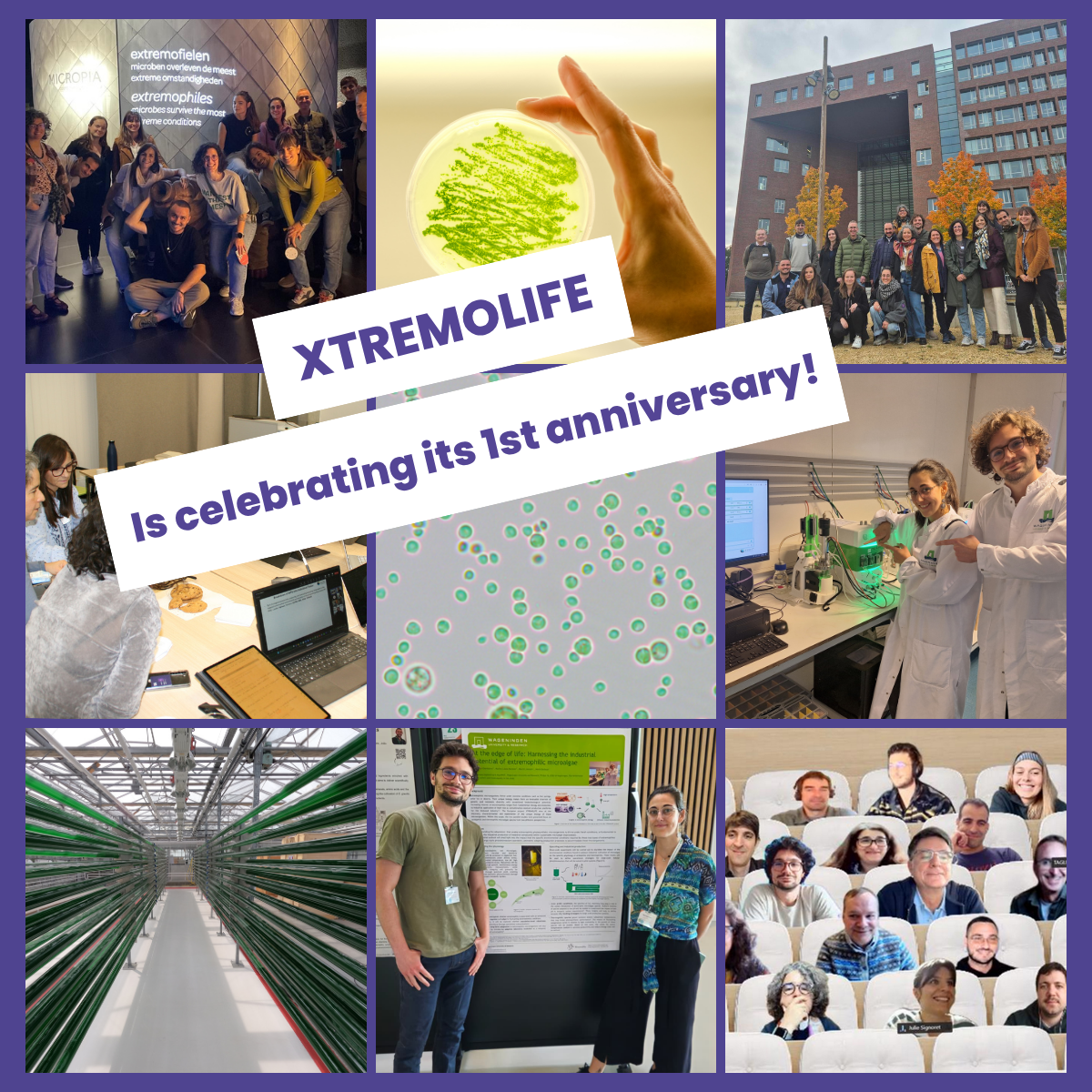
From bringing together nearly 1,000 extremophilic microorganisms to preparing expeditions to some of the planet’s most extreme environments, XTREMOLIFE has made significant progress in its first year.
Since its official kick-off in Wageningen, the Netherlands, in October 2025, XTREMOLIFE partners have been working together to lay the foundations for the project. One year later, several important milestones have been reached, scientific activities are well underway, and new adventures are on the horizon.
A major first achievement: Nearly 1,000 extremophilic strains brought together
One of the main achievements of this first year has been the development of XTREMOBANK, a database bringing together extremophilic microorganisms from European culture collections.
As of September 2026, XTREMOBANK contains 986 strains, more than double the initial target of 400 set at the start of the project.
The database brings together contributions from four major culture collections: BEA (Spanish Bank of Algae, 470 strains), NORCCA (Norwegian Culture Collection of Algae, 305 strains), LEGE-CC (Blue Biotechnology and Ecotoxicology Culture Collection, Portugal, 102 strains), and ACUF (Algal Collection at the University Federico II, Italy, 109 strains).
These collections cover a wide diversity of microorganisms adapted to extreme conditions, including freezing temperatures, intense heat, high salinity, acidity, and desert environments. Cyanobacteria, green algae, and diatoms are among the most represented groups. By bringing together and harmonising information from these four collections, XTREMOBANK provides researchers with a valuable resource for exploring microbial biodiversity and identifying strains with potential biotechnological applications. All strains are also publicly available through their respective culture collections.
New microorganisms isolated during upcoming field expeditions will be added to the database, alongside more detailed information and improved identification of existing strains.
The next step is to explore the biotechnological potential of this microbial diversity. Selected strains will be cultivated to produce biomass for initial bioactivity screening, with the aim of identifying promising compounds for applications in human, animal, and plant health.
Several partners are working on bioprospecting the strains deposited in XTREMOBANK. Selected strains were successfully grown under laboratory conditions and provided to other work packages for bioactivity testing. This is an important step towards biodiscovery, with more results to come.
Getting ready to explore the extremes
Alongside laboratory activities, XTREMOLIFE partners are preparing to explore some of the most extreme environments on Earth.
Three major sampling campaigns are planned, each focusing on a different type of extreme ecosystem:
The Canary Islands, Spain: A sampling campaign in volcanic environments, including La Palma, where the 2021 eruption created unique conditions for studying microbial life, will take place on October 20, 2026, just ahead of the project’s General Assembly, scheduled for October 21–23.
Antarctica: An expedition scheduled at the end of this year will take researchers on a journey through the Falkland Islands and Antarctica to investigate microorganisms adapted to polar conditions.
The Tabernas Desert, Spain: Planned for 2027, this campaign will investigate microorganisms capable of surviving in one of Europe’s most arid environments.
In preparation for these expeditions, partners are also working on innovative sampling technologies and harmonised protocols to ensure the quality and comparability of the samples and scientific data collected.
Sharing the adventure with a growing community
Beyond its scientific activities, XTREMOLIFE has also been working to share its research and introduce a wider audience to the fascinating world of extremophiles.
Over its first year, XTREMOLIFE has established a strong communication presence, making the world of extremophiles accessible to a broad audience.
The project’s website is now live, providing news, resources, and insights into its activities. Meanwhile, its LinkedIn community has grown to around 1,100 followers, reflecting increasing interest in the project and its scientific mission. A communication kit has been developed, including an infographic, PowerPoint presentation templates, flyers, roll-up banners, and other materials to support communication and dissemination activities across the consortium.
Through videos, scientific conferences, events, and regular updates, consortium partners have been actively sharing their expertise and raising awareness of the remarkable potential of extremophilic microorganisms.
One original initiative is « Microbe of the Month », developed in collaboration with Micropia, the microbiology museum in Amsterdam. Launched in July 2026 with Galdieria sulphuraria, a remarkable microorganism capable of thriving in hot, acidic environments, this initiative brings the world of microbes closer to the public.
Micropia has also produced two videos one introducing extremophiles and another highlighting the « Microbe of the Month » initiative. And there’s more to come: the project’s official promotional video will be released very soon!
Through these activities, along with participation in scientific conferences and events, XTREMOLIFE partners are raising awareness of the remarkable potential of extremophilic microorganisms and engaging a growing community around the project.
Stronger together: Collaborating with other EU Projects
XTREMOLIFE is also actively collaborating with other European research initiatives through the « Synergy at the Extreme » cluster, alongside its sister projects XTREAM, EXPLORA, and NEXTMARINE.
By bringing together complementary expertise in extremophile research, biodiversity, and biotechnology, this collaboration provides opportunities to exchange knowledge, share research advances, and increase the visibility of European research in this field.
Several joint activities are already underway, including a quarterly newsletter, with four editions published so far, and an ongoing video interview series featuring researchers from the four projects, with around a dozen interviews already released. The cluster also organised a joint webinar in September 2026, bringing together experts to share their work and insights into extremophile research.
And there is more to come! The four projects are planning further joint activities through the Horizon Results Booster programme, continuing to strengthen collaboration and reach a wider audience interested in life at the extremes.
Looking ahead: The next steps for XTREMOLIFE
This first year has been an important step for XTREMOLIFE. With nearly 1,000 strains brought together in XTREMOBANK, the first biodiscovery activities underway, field expeditions in preparation, and a growing community following the project, the foundations are now in place for the next stages.
The coming year will see the first results from bioactivity screening, new microorganisms collected from extreme environments, and further progress towards identifying bioactive compounds with potential applications in biotechnology.
And the next big milestone is just around the corner! Next week, XTREMOLIFE partners will gather in the Canary Islands for the project’s General Assembly (October 21-23), alongside the first sampling campaign. A great opportunity for partners to meet again, review progress, and take the first steps into exploring extreme environments together.
A big thank you to all the partners, researchers, and supporters who have contributed to this first year.
The adventure is just beginning. Stay tuned to follow XTREMOLIFE as it continues exploring life at the extremes.