

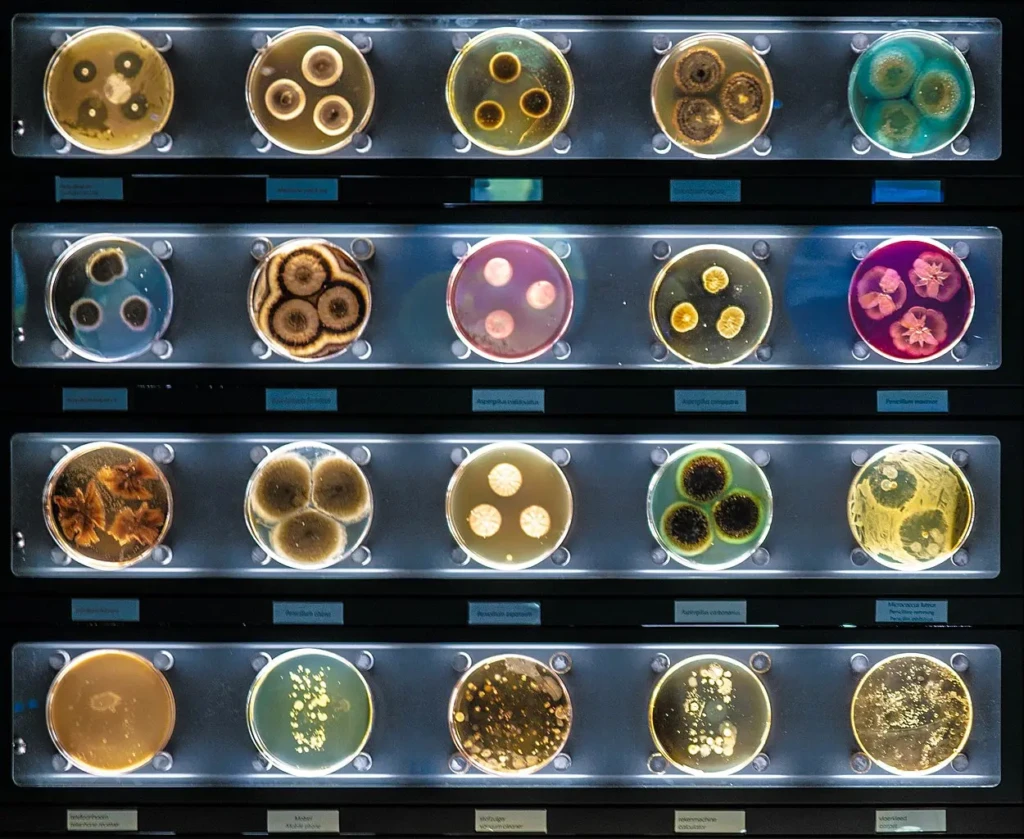
Beyond its scientific ambitions, XTREMOLIFE will distinguish itself through original and engaging communication and outreach activities, developed in partnership with two major partners: the Micropia Museum & the Viking Cruise expeditions.
Micropia Museum: translating microbial science for the public
Micropia, the world’s first museum fully dedicated to microbes and microbiology, is a full member of the XTREMOLIFE consortium. Known for its interactive exhibits and strong public-engagement philosophy, Micropia highlights the essential role of micro-organisms in health, ecosystems, and sustainability.
Within XTREMOLIFE, Micropia plays a key role in science communication and educational outreach. Its expertise is leveraged to transform complex research outputs into clear, engaging, and accessible content for diverse audiences.
With approximately 110,000 visitors per year, the museum offers a powerful platform to raise awareness of extremophiles, extreme ecosystems, and the scientific methods used to explore them.
Planned actions include:
- The production of two dedicated videos presenting XTREMOLIFE’s scientific questions and fieldwork
- Daily short lab talks connecting ongoing research with broader societal challenges
- A recurring “Microbe of the Month” feature linked to project discoveries
- A temporary exhibition during the final six months of the project, showcasing XTREMOLIFE’s results and visual material
Together, these activities ensure continuous and structured engagement with the public throughout the project lifecycle.
Polar cruises and citizen science: science at sea with Viking Expeditions
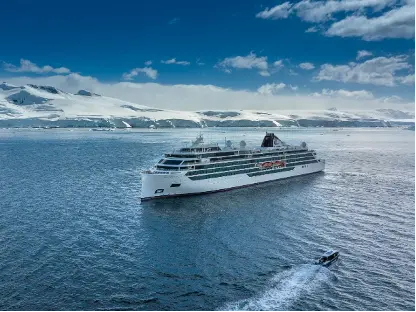
Viking Cruises, in collaboration with Xtremolife partner NIVA (Norwegian Institute for Water Research), provides the second pillar of XTREMOLIFE’s outreach strategy: a large-scale citizen-science program embedded in cruises.
NIVA has an established collaboration with Viking ships, where state-of-the-art FerryBox systems are already installed. XTREMOLIFE builds on this infrastructure by deploying the XTREMOsensor and an improved FerryBox equipped with an autosampler. These systems are used to monitor extremophilic conditions in Antarctic marine environments, as well as during shore- and ice-based field excursions. They will take place during Antarctic sampling campaigns organised in the Southern Ocean and Antarctica during the austral summer.
Sampling is carried out by XTREMOLIFE researchers together with ship scientists and passengers acting as citizen scientists. This direct involvement strengthens public understanding of scientific practices, data collection, and environmental monitoring, while simultaneously generating valuable datasets for the project.
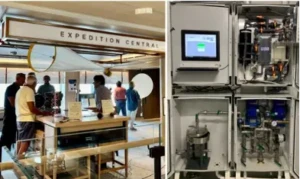
Through the Viking Cruise Citizen Science Program, up to one million passengers per year are exposed to ongoing scientific research. Participants can also attend daily lectures by onboard scientists, watch dedicated videos and documentaries, and visit onboard laboratories to directly interact with research activities.
By combining museum-based outreach with participatory science at sea, XTREMOLIFE demonstrates how advanced microbiological research can be shared, experienced, and co-produced with society at large.